
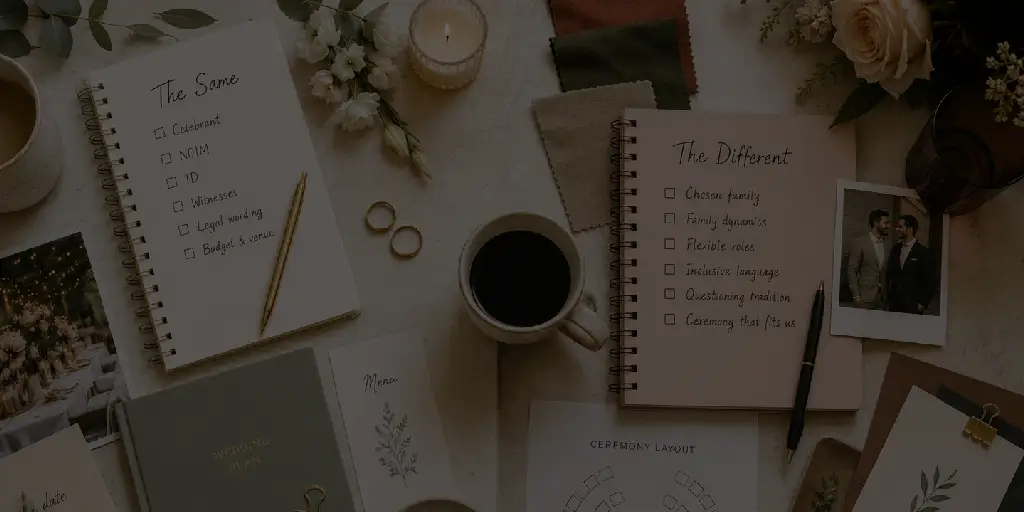
Planning a queer wedding in Australia is, in one sense, exactly the same as planning any wedding.
You still have:
- logistics
- budgets
- venue decisions
- guest list politics
- and a surprising number of small decisions that all feel important at once.
That part doesn’t change.
What doesn’t change
Let’s start here, because there’s a lot of confusion online.
Legally, the process is exactly the same.
You’ll still need:
- a registered celebrant
- a Notice of Intended Marriage (NOIM)
- valid ID
- two witnesses
- to meet the same legal wording requirements.
There’s no separate “queer marriage process” in Australia.
If anything you’ve read suggests otherwise, it’s overcomplicating things.
Most couples don’t realise this…
Not in a dramatic way.
But in how couples approach the day.
1. Tradition gets questioned earlier
A lot of queer couples don’t automatically default to “this is how weddings are done”
Instead, the question becomes “Does this actually fit us?”
That shift changes everything.
You’re less likely to:
- include things out of obligation
- follow structure that doesn’t make sense
- keep elements that feel slightly off.
What that leads to is cleaner, more intentional ceremonies.
Not because they’re “different”.
But because they’ve been properly thought through.
2. Family dynamics can be more layered
This is often where things require a bit more care.
You might be working with:
- fully supportive families
- mixed responses
- chosen family
- redefined roles
- or relationships that don’t fit a standard structure.
What this actually means:
Not that the wedding is harder.
but that decisions need to be more intentional
- who’s involved
- how people are included
- what gets acknowledged (and what doesn’t).
3. Roles are less pre-written
Traditional weddings come with:
- default roles
- clear expectations
- a built-in structure
Queer weddings often don’t.
Which means questions like:
- Who walks in first?
- Do we even have an aisle?
- Who stands where?
- Who speaks?
- Who is involved at all?
That can feel like freedom – or a bit overwhelming
Usually both.
The upside:
- You’re not locked into anything
- You get to build something that actually fits
Most couples don’t realise this . . . but one of the biggest advantages of planning a queer wedding is that you have more permission to build from scratch.
That can feel like more work early on.
But it usually leads to a day that makes far more sense.
4. Language matters more (but not in the way people think)
It’s not about:
- overcorrecting
- making everything “perfect”
- or turning the ceremony into a statement (although you certainly can!)
No assumptions.
No awkward phrasing.
No “trying too hard”.
Just something that sounds like you.
5. The goal is usually comfort, not performance
A lot of queer couples aren’t trying to:
- impress
- perform
- or create a “moment”.
They want something that feels easy to be in.
That applies to:
- the ceremony
- the venue
- the people around you.
Interested to contribute to my blog?
What helps most when planning a queer wedding in Australia
Working with the right people makes a bigger difference than anything else.
Look for suppliers who:
- don’t make assumptions
- don’t need coaching on basic language
- can handle nuance without making it a big deal
- understand that “inclusive” is not the same as “generic”
- don’t turn your wedding into a feature.
Why this matters
Because every time you have to:
- explain
- correct
- or manage someone
it takes energy
And that’s energy you shouldn’t have to spend.
A quick reality check
If something feels:
- slightly uncomfortable
- a bit off
- harder than it should be
pay attention to that.
Good planning should feel, clearer over time, not heavier
Final thought
A queer wedding in Australia is not a completely different category of wedding.
But it often creates more space for:
- honesty
- intention
- better decisions.
And that usually leads to a better ceremony.
If you want a ceremony that actually reflects that
That’s where I come in.
I work with couples who:
- don’t want to follow a template
- don’t want anything performative
- want something that feels natural, grounded, and genuinely theirs.
Enquire / Check my availability here.
11 Surprising destinations to avoid for same-sex honeymoons
There are more than 70 countries where same-sex relations are illegal and, in 8 of those, same sex relations are punishable by death. Find out which countries you should avoid for your same-sex honeymoon.
38 Same-Sex Wedding Rituals & Traditions
Know about 38 wedding rituals and traditions that have become part of straight weddings over the centuries and how their alternatives are reinventing the LGBTIQ+ weddings in a authentic way!
4 Much Needed Changes In The Notice of Intended Marriage (NOIM)
There is a need for changes in the NOIM. The challenges that every marriage celebrant and couples face can be avoided if these changes are implemented.
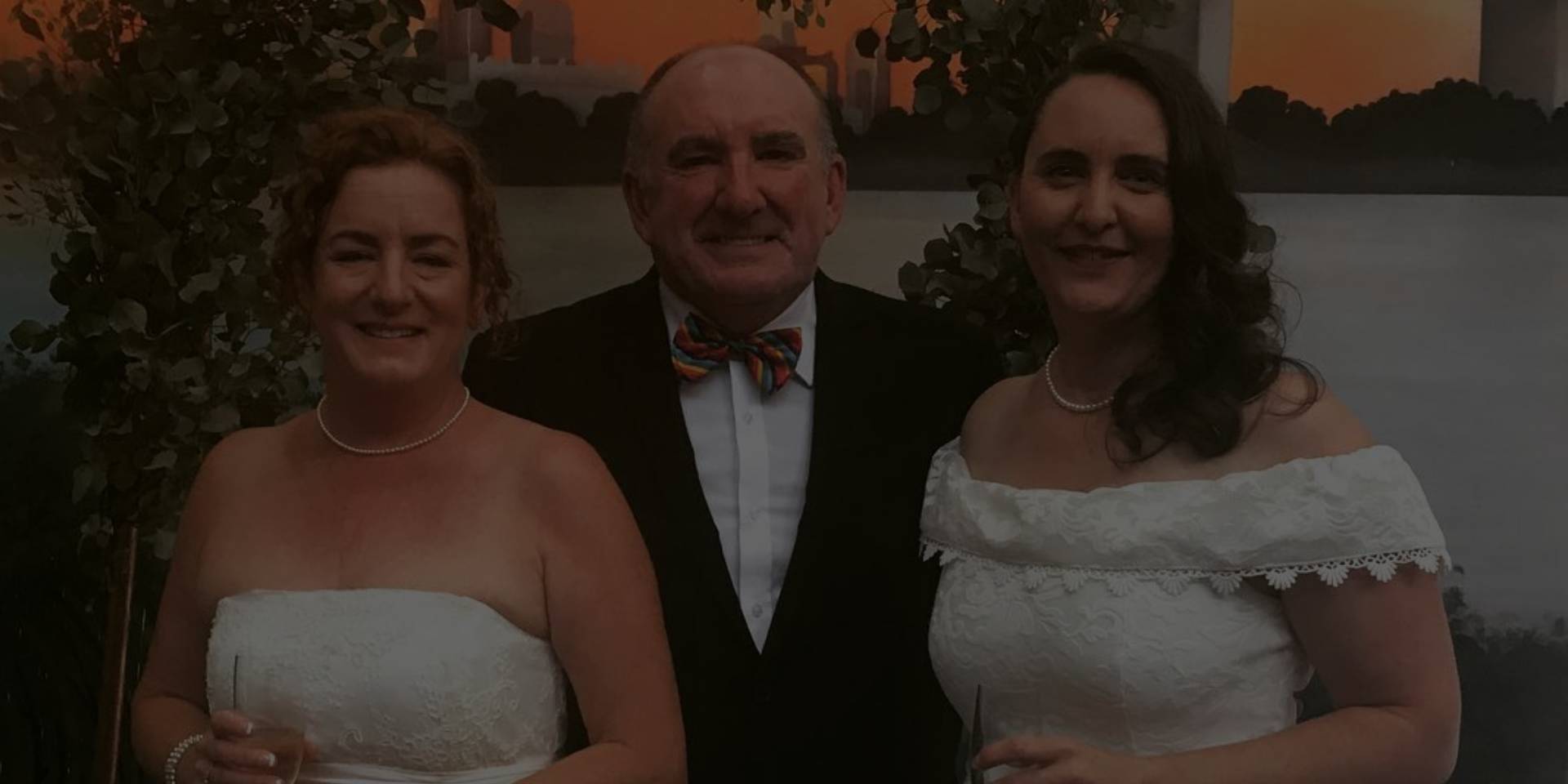
4 Wedding & Engagement Ring Alternative Trends In 2021
Are you getting married but are looking for a ring that’s outside the box? Nowadays people are less bound by traditional ideas of seeking out a ring that fits into the wedding or engagement ring category, but rather a piece that suits their personality. Read more.
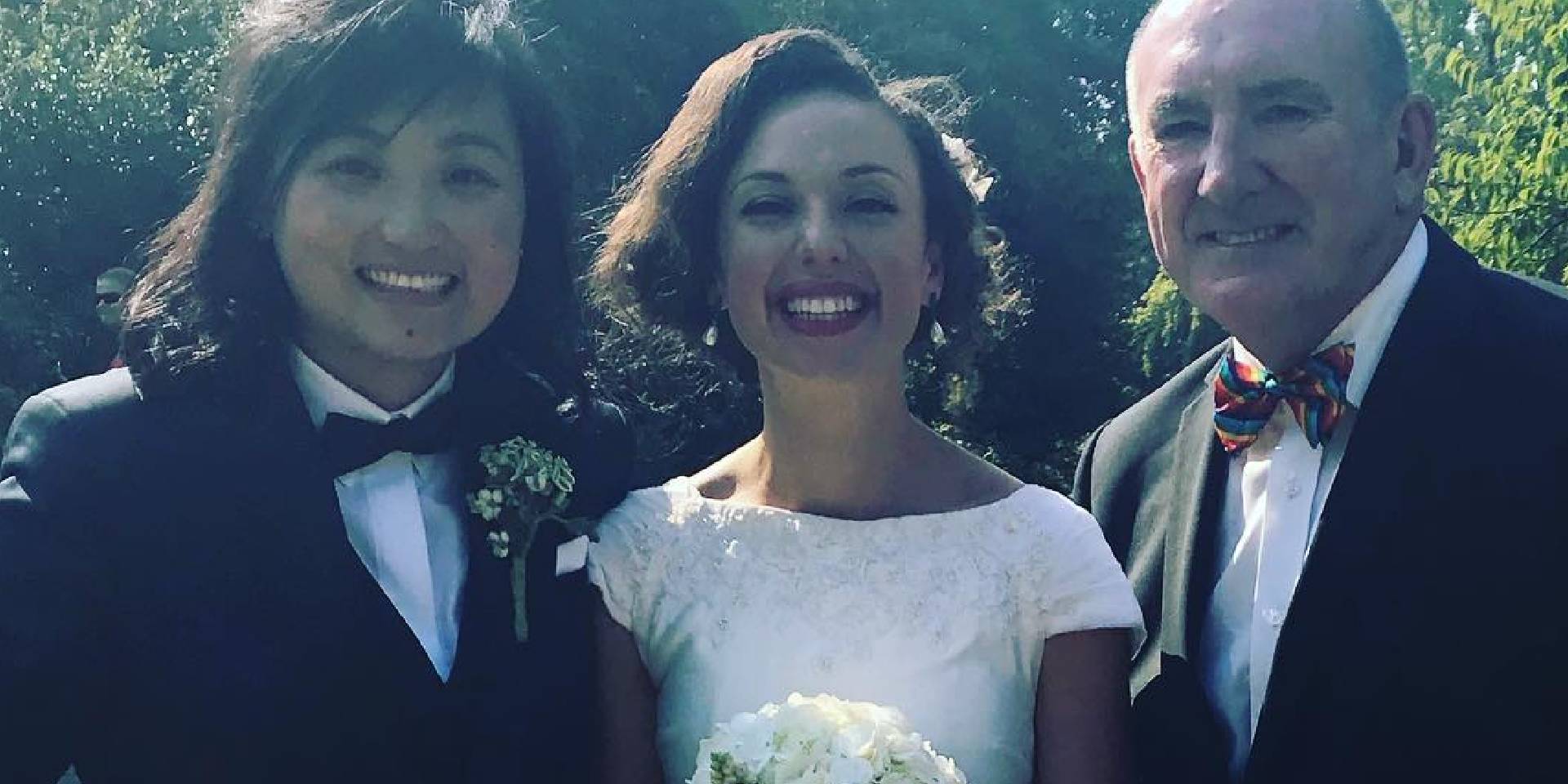
7 Things You Must Know Before Attending a Same-Sex Wedding
Find out 13 gift ideas in this blog for a same sex wedding. Gifts range from pet care, wedding photography, a painting perhaps or just cook for the couple.
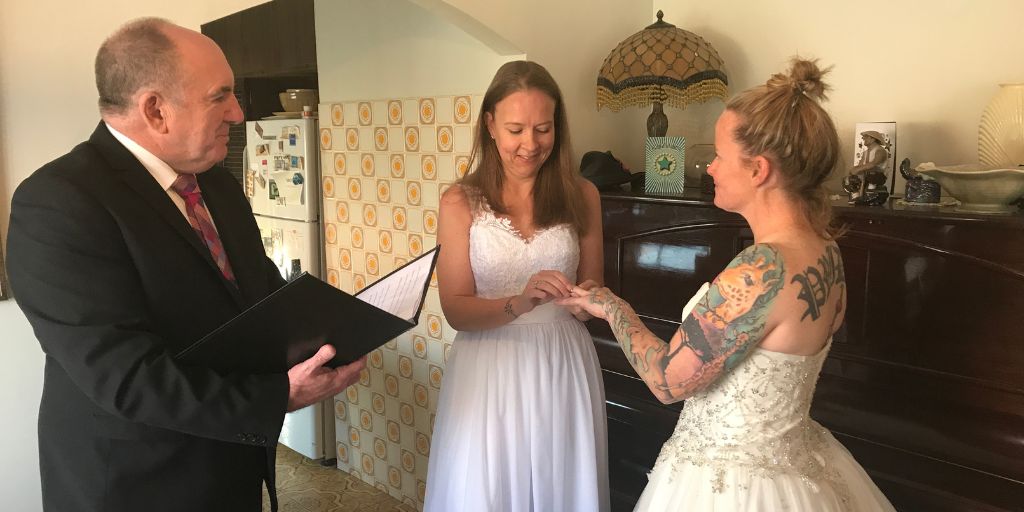
8 Statistical Facts About Same Sex-Marriage & Couples in Australia
Australia is the 25th country in the world where marriage equality and same-sex marriage became a legal right. Same-sex marriage became law in Australia on 9 December 2017.
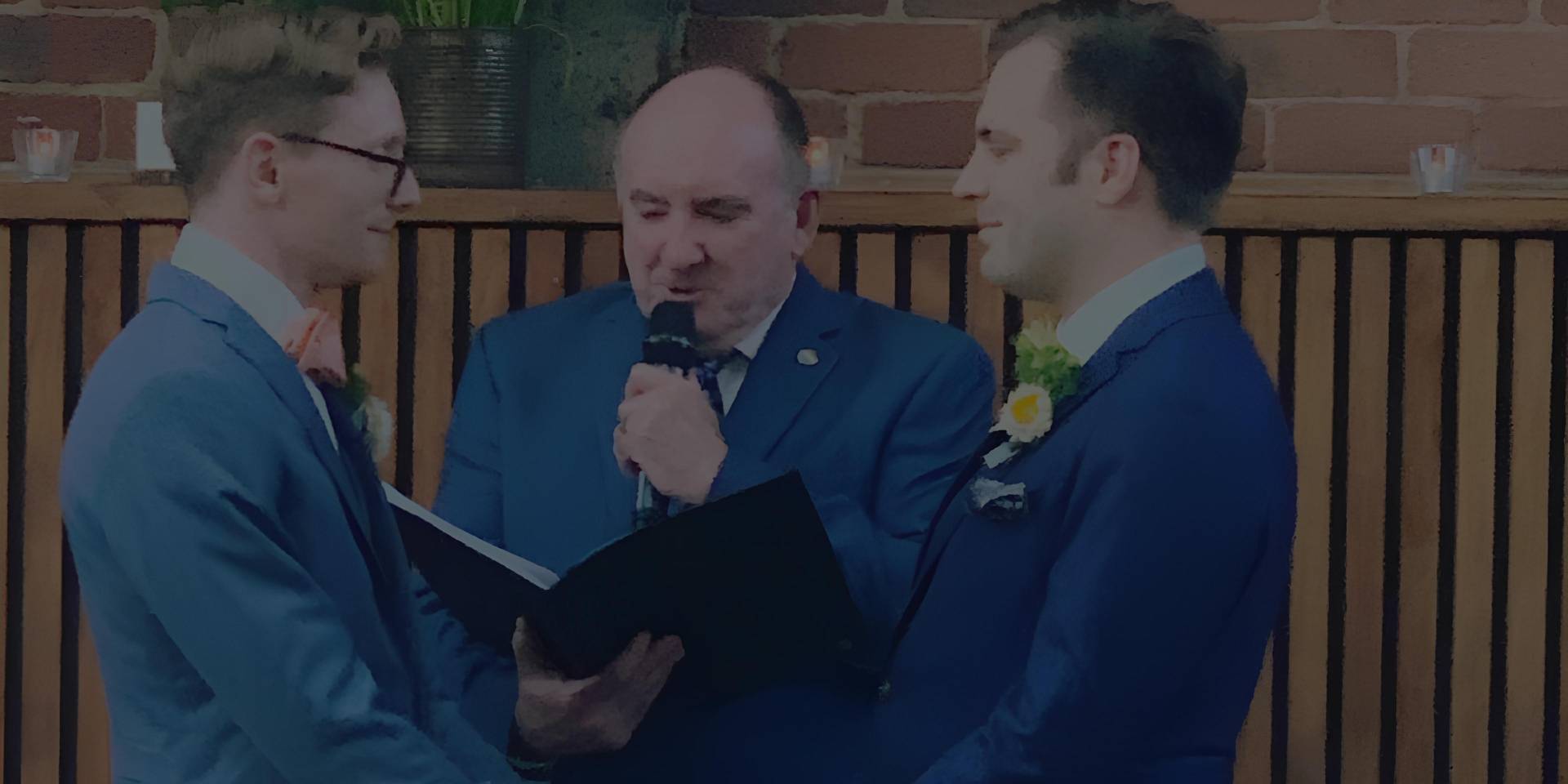
All you need to know about IDAHOBIT
Each year, on 17 May, the LGBTIQ+ community around the world celebrates the International Day Against Homophobia Biphobia Interphobia and Transphobia – IDAHOBIT. Learn all you need to know about this day.
All you need to know about Marriage Equality in Australia
Find out what has changed since 9 Dec 2017 when the Australian Federal Government passed the Marriage Amendment Act 2017 and the journey so far.
Commitment Ceremony vs Legal Marriage in Australia (LGBTQ+ Guide)
What’s the difference between a commitment ceremony and legal marriage in Australia? Here’s a clear LGBTQ+ guide to help you choose what’s right for you.
Community Support Services in Melbourne
This blog has a list of LGBT community support services that are being offered by committed institutions and bodies in Melbourne. There is much that can be done, and together we can help each other lead a better life.

Eight Months Prior To Your Wedding Day
Eight months to wedding day. There is a little less to do than others. This is one of those months. Setting up dates and budgeting for the wedding is on the list.
Eleven Months Prior To Your Wedding Day
Eleven months to wedding day its important that you start working on your celebrant, photographer, videographer, other AV providers, and music.
Emerging Gay-friendly Wedding Venues in Melbourne
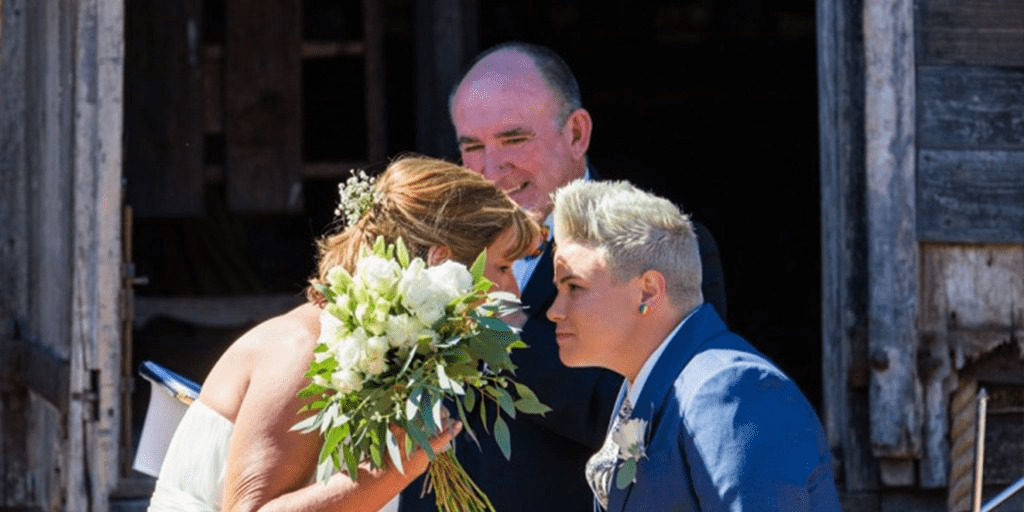
Discover inclusive, flexible LGBTIQ+ wedding venues in Melbourne—from rooftop bars to gardens—perfect for smaller, more personal celebrations shaped by you.
FAQs on Foreign LGBTIQA+ Couples getting Married in Australia
Wondering how gay weddings work in Australia? The legal process is exactly the same — no extra paperwork, just your Notice of Intended Marriage, two witnesses, and an authorised celebrant. The best part? You have complete freedom to create a ceremony in Melbourne that’s authentic, inclusive, and unapologetically you.
Five Months Prior To Your Wedding Day
Five months to wedding day so it is important that you start working with your photographer, the decorator to ensure that everthing is on track.
Follow-up after your Wedding
The Day to wedding day so it is important that you start working with your photographer, the decorator to ensure that everthing is on track.
Four Months Prior To Your Wedding Day
Four months to wedding day so it is important that you start working with your photographer, the decorator to ensure that everthing is on track.
Four weeks Prior To Your Wedding Day
Four weeks to wedding day so it is important that you start working with your photographer, the decorator to ensure that everthing is on track.
Fun Ideas for Your Vow Renewal in Melbourne
If you are a same-sex couple, your ceremony can be similar to any other wedding vow renewal in Melbourne. Creative vow renewal ideas can light up your ceremony. Beachside ceremonies, a garden setting or some important place that connects both of you - a unique idea can make it special.
Gay Celebrant Melbourne: What to look for (and what to avoid)
Looking for a gay celebrant in Melbourne? Choose someone who goes beyond “inclusive” language to create a ceremony that feels natural, modern, and completely true to your relationship.
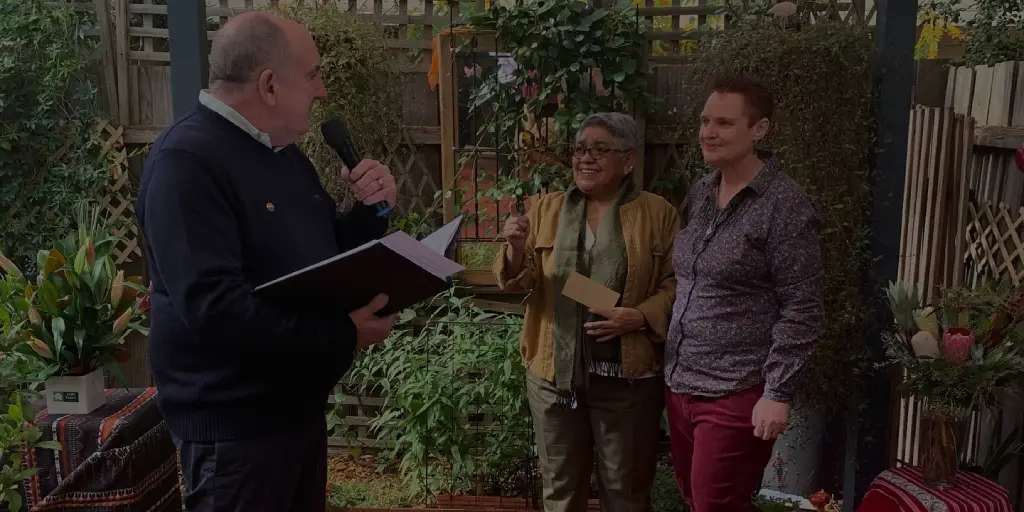
Gay Wedding Celebrant Daylesford | LGBTQ+ Celebrant Daylesford VIC
Inclusive gay wedding celebrant in Daylesford, VIC creating relaxed, personalised LGBTQ+ ceremonies that feel natural, meaningful, and true to you.
Gay Wedding Celebrant in Fitzroy
What’s the difference between a commitment ceremony and legal marriage in Australia? Here’s a clear LGBTQ+ guide to help you choose what’s right for you.
Gay Wedding Celebrant Melbourne CBD
Looking for a gay wedding celebrant in Melbourne CBD? Inclusive, personalised LGBTQ+ ceremonies in the heart of Melbourne.
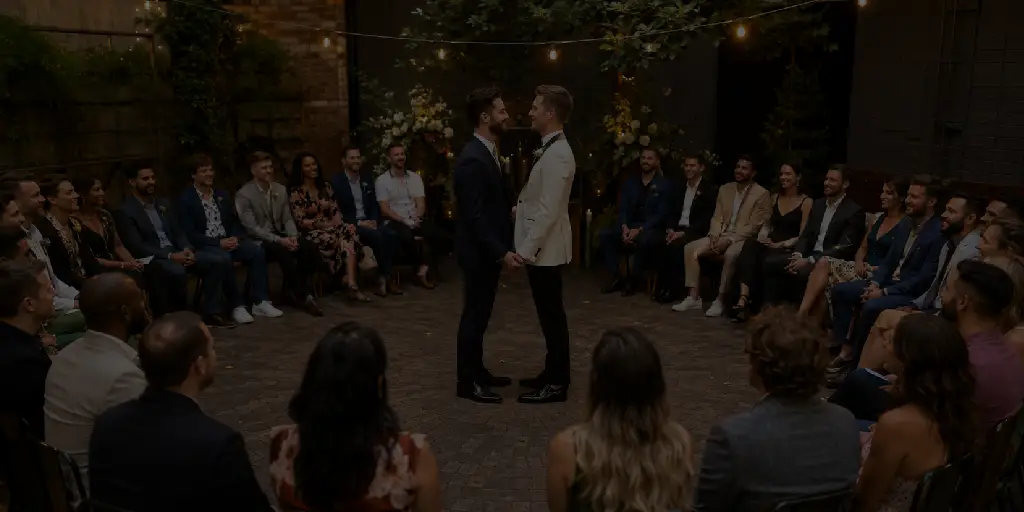
Gay Wedding Ceremony Ideas That Actually Feel Like You
One of the biggest advantages of planning a queer ceremony is you’re not automatically tied to “this is just how it’s done”. Which means you get to ask better, more useful questions.
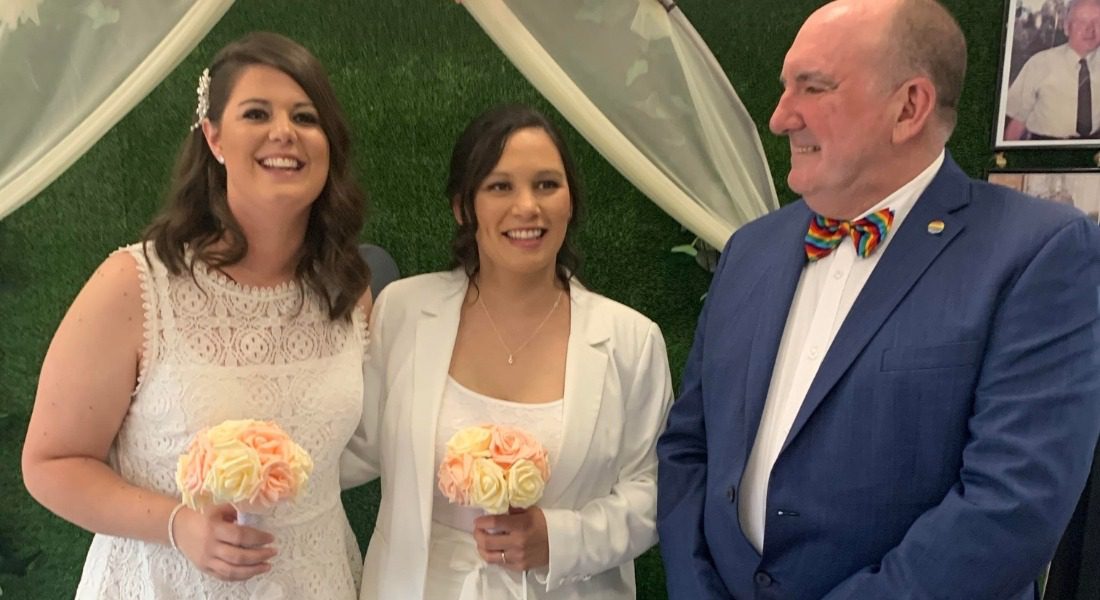
Gay Wedding Ideas in Australia
Almost every couple I marry is seeking a meaningful ceremony that allows them to tell their story. They want a wedding ceremony that they can identify with and celebrates their love, in a way like no one else they know has done.
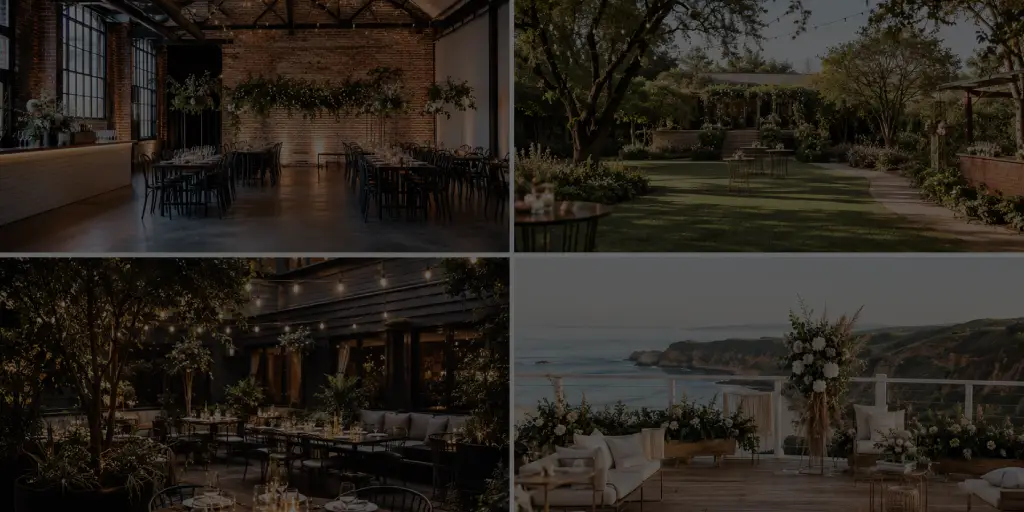
Gay Wedding Venues Melbourne: Inclusive Spaces That Actually Feel Good to Be In
What options are available in and around Melbourne for organizing an inclusive and meaningful gay wedding ceremony
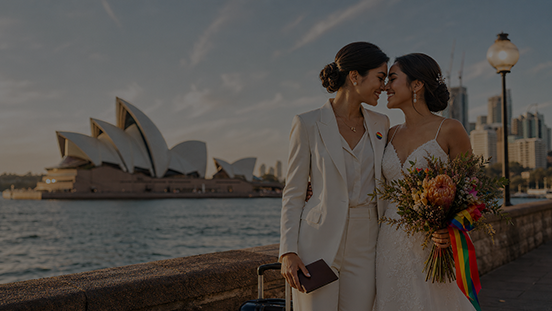
Getting Married in Australia on a Tourist Visa (LGBTQ+ Guide)
Find out how to get married in Australia on a tourist visa. This has everything you need to know.
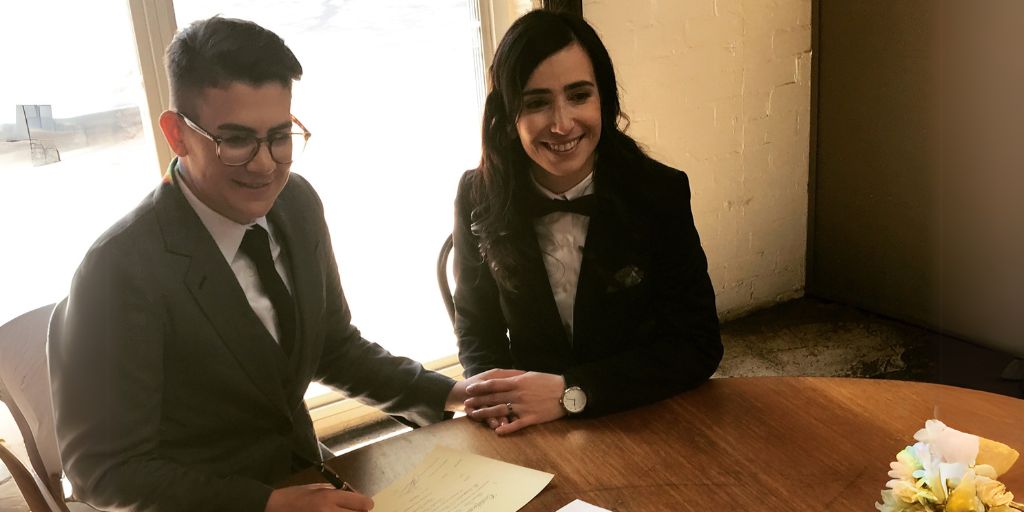
Getting married in Australia on a visa – for same-sex couples
Easy Steps to Getting married in Australia on a visa. Can I marry in Australia on visitor visa? Legal requirements to get married in Australia.
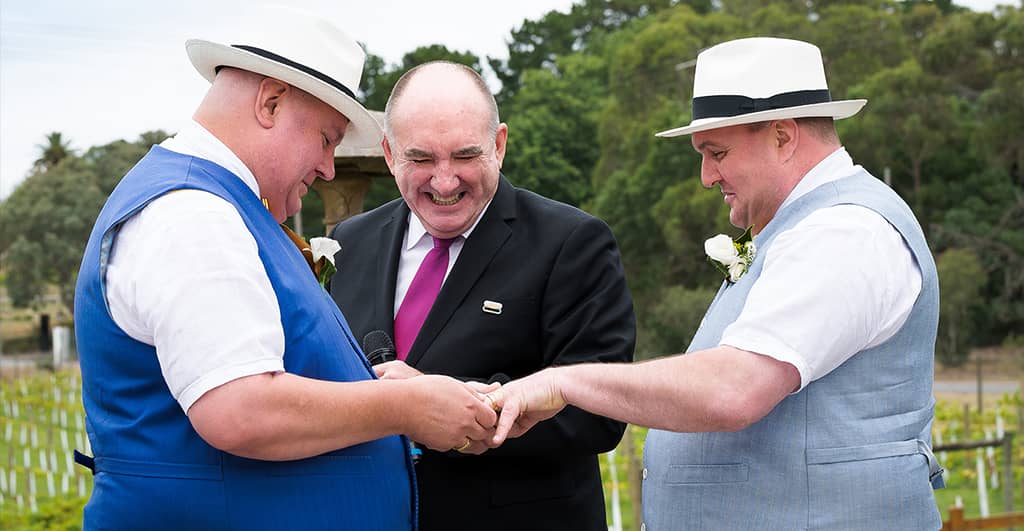
How a Celebrant Can Customise Your Wedding Ceremony in Melbourne
By hiring a wedding celebrant in Melbourne, you will have the flexibility to design a custom wedding ceremony that suits your individual preferences and that celebrates your unique family. You can have the ceremony anywhere and anytime you want, that reflects your personal beliefs and lifestyle.
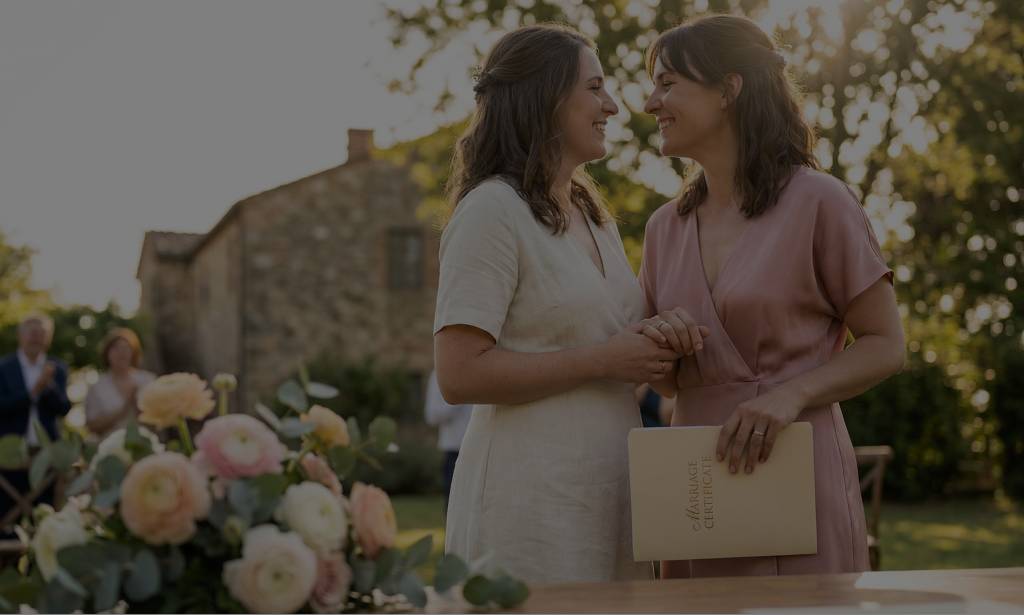
How do gay weddings work? (Yes, it’s a real question)
Wondering how gay weddings work in Australia? The legal process is exactly the same — no extra paperwork, just your Notice of Intended Marriage, two witnesses, and an authorised celebrant. The best part? You have complete freedom to create a ceremony in Melbourne that’s authentic, inclusive, and unapologetically you.
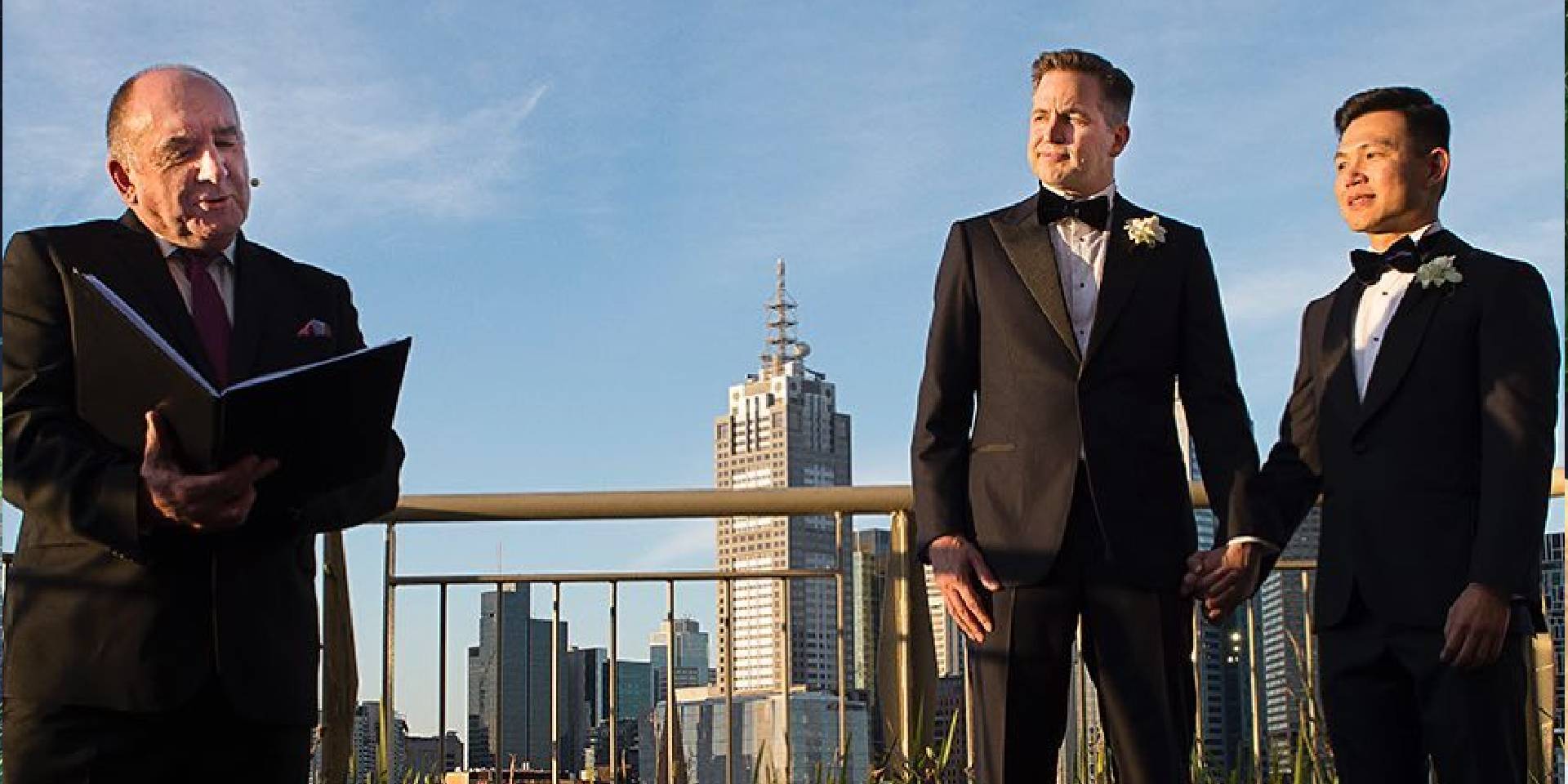
How To Get Married in Australia – For LGBT Couples
In Australia the same law applies to straight couples and LGBT couples. Few aspects are to be remembered like Free Consent, the Marriage Act 1961 etc.
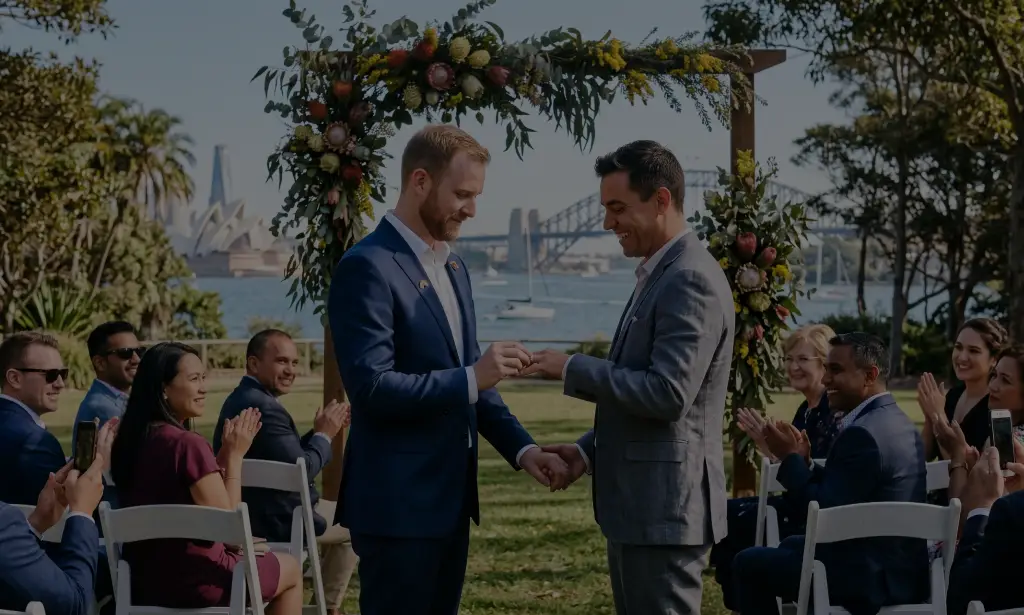
How to Get Married in Australia as an LGBTQ+ Foreigner (2026 Complete Guide)
A friendly guide for Australian and international couples — with just the right amount of sparkle.
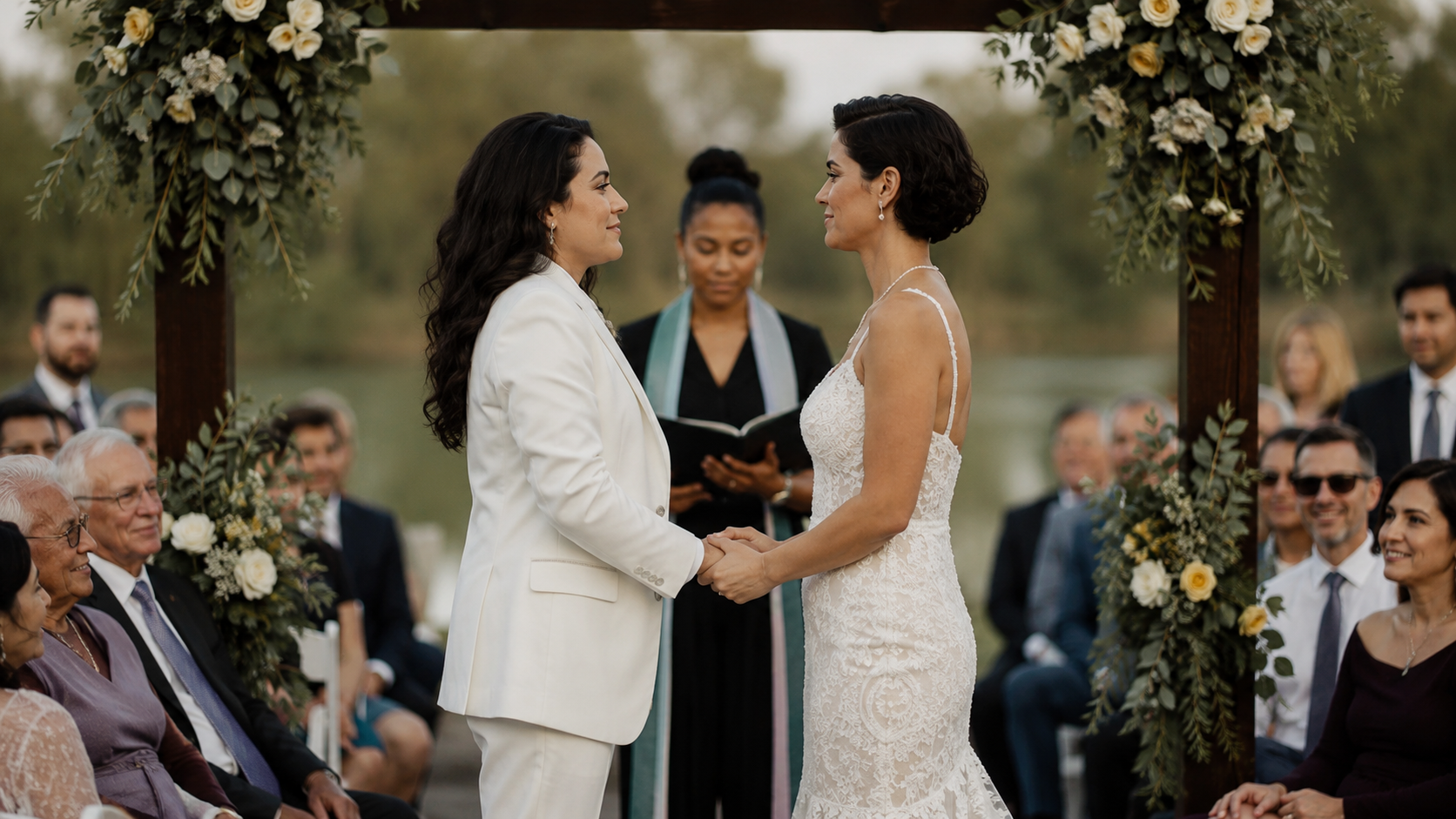
How to Navigate Family Dynamics at a Queer Wedding
Planning a queer wedding? Learn how to navigate family dynamics, honour chosen family, and create a ceremony that feels authentic, calm, and truly yours.
How To Plan Your Commitment Ceremony in Melbourne
Lot of couples desire to plan a commitment ceremony instead of a marriage ceremony. Planning a same-sex commitment ceremony is really very similar to planning any other wedding ceremony in Melbourne. Find out what to Consider when Planning a Commitment Ceremony vs a Marriage Ceremony in Melbourne?
How To Plan Your Same Sex Wedding on a $1000 Budget
Same sex wedding on a budget means lot of things. With a creative approach and some romantic flair of planned events, we bet you can make your wedding a memorable one right here in Melbourne.For starters you can avoid holidays & weekends.
How to Work Respectfully With LGBTI Couples as a Wedding Supplier
As a Wedding Supplier it is vital to avoid any assumptions and know the preferences of your LGBT client. A Wedding Supplies number one rule should be to reassure a LGBTI couple that they will never compromise their status. Being discreet in any communication helps a lot. Find out more in this blog.
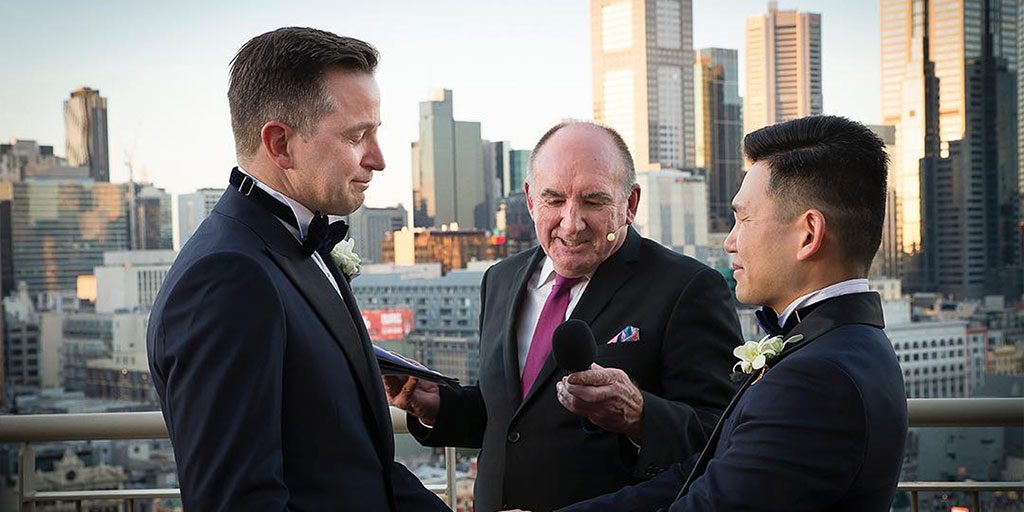
Ideas for Your Commitment or Marriage Ceremony in Melbourne
Four fresh marriage ceremony ideas that go beyond the traditional wedding or commitment ceremony with these unique unity ceremonies. You can choose from a Sand ceremony, Love letter ceremony, Planting a tree or Handfasting as an unity action to solidify your commitment in Melbourne. Read for more.
Impact of COVID-19 restrictions on Weddings & Funerals – JOY 94.9 Interview
The journey to become a parent is not always easy for any couple. Increasingly, it is a journey that more and more people – both couples and single people – are choosing to embark on. Read on to know about the surrogacy journey of a gay couple in Australia.
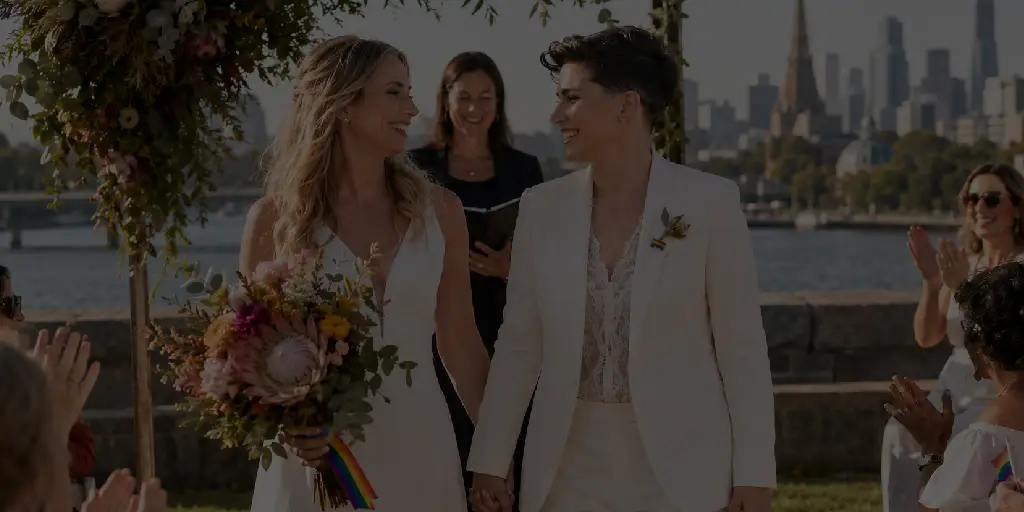
Is Same-Sex Marriage Legal in Australia? (2026 Guide for LGBTQ+ Couples)
This guide explains the legal requirements, international considerations, and what queer couples need to know when getting married in Australia.
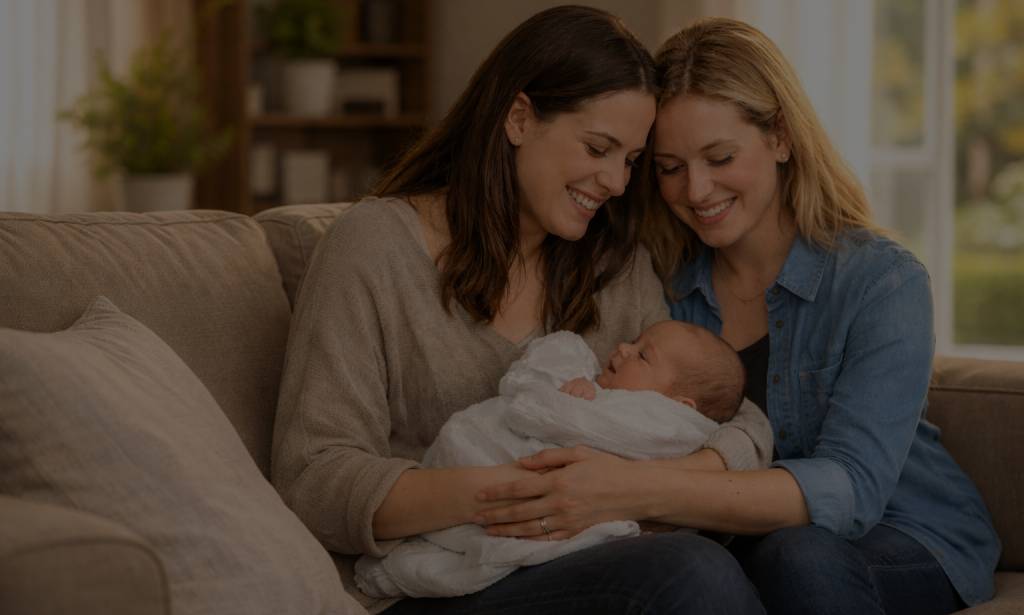
LGBTIQA+ Parenthood Pathways in Victoria: Legal, Medical and Practical Considerations
Discover how LGBTIQA+ individuals facing persecution in their home countries can seek safety and protection in Australia. Learn about legal options, case studies, and the importance of finding a supportive legal team.
LGBTIQA+ Wedding Guide Download – Australia as a Destination For Your Wedding
Download your Free copy of Same-Sex Wedding Planner specially designed for LGBT weddings in Melbourne, Victoria. Month-by-month to-dos for couples for a unique wedding ceremony.
Migration Legal Services for LGBTIQA+ Individuals Seeking Safety in Australia
Discover how LGBTIQA+ individuals facing persecution in their home countries can seek safety and protection in Australia. Learn about legal options, case studies, and the importance of finding a supportive legal team.
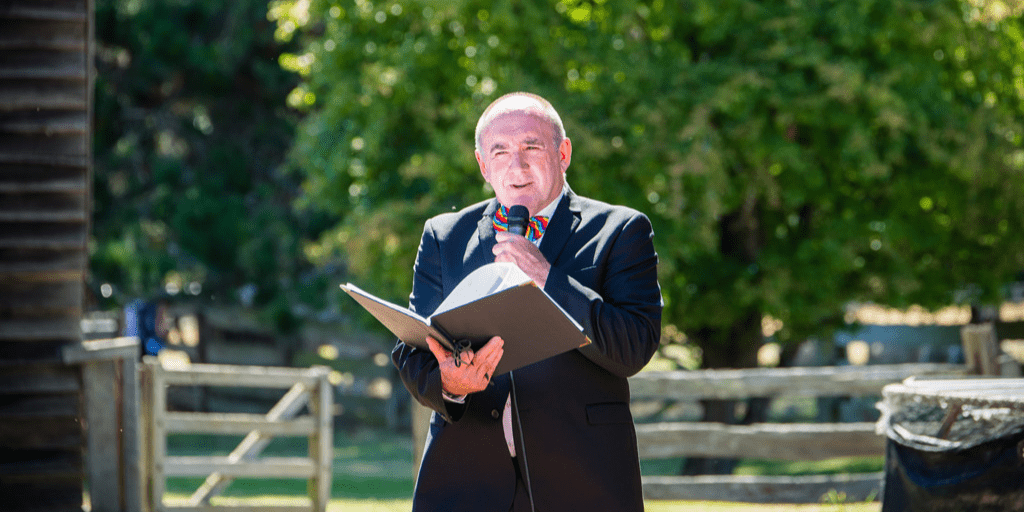
My journey towards 200 LGBTIQA+ weddings
Discover the inspiring journey of Bronte Price, a trailblazing marriage celebrant dedicated to celebrating love in all its forms. From the challenges of pre-marriage equality to performing 200+ LGBTIQA+ weddings, explore his commitment to creating authentic, inclusive ceremonies and empowering couples worldwide.
Nine Months Prior To Your Wedding Day
Nine months to wedding day so it is important that you start working with your photographer, the decorator to ensure that everthing is on track.
On Your Wedding Day – For Your Attendants
The Day to wedding day so it is important that you start working with your photographer, the decorator to ensure that everthing is on track.
One Week Prior To Your Wedding Day
One weeks to wedding day so it is important that you start working with your photographer, the decorator to ensure that everthing is on track.
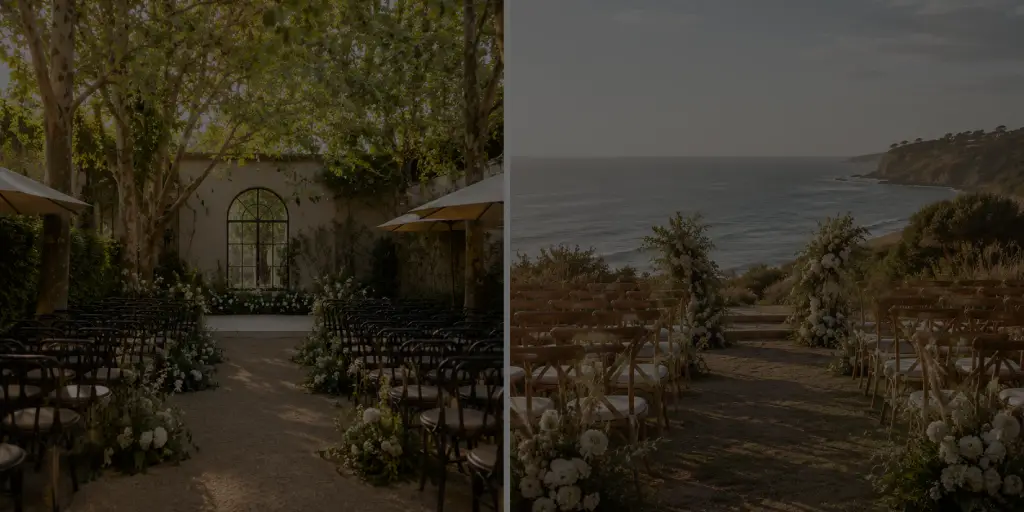
Outdoor Wedding Ceremonies Melbourne: Beautiful, Inclusive, and Slightly Less Simple Than They Look
If you’re planning an outdoor ceremony and thinking “We just want something simple and relaxed”.
Planning a Queer Wedding in Australia: What’s Different (and What Isn’t)
A queer wedding in Australia is not a completely different category of wedding. But it often creates more room to personalize it.
Quick Facts About Same-sex Prospective Marriage Visa in Australia
The change in Australian marriage law allowing LGBT couples to get married opened up immigration opportunities that didn't previously exist. Now the Prospective Marriage Visa is now open to anyone.
Role of the Civil Marriage Celebrant
What can you expect from a Civil Marriage Celebrant during the planning and the wedding ceremony? How to get all the help you need from the celebrant for your wedding?
Same Sex Couples – Change of Name After Marriage?
Do you need to change your last name after they’ve got married as a same-sex couple? Or can you continue with your present surname? Find out the pros and cons of name change after marriage.
Same-Sex Wedding Checklist
In Australia the same law applies to straight couples and LGBT couples. Few aspects are to be remembered like Free Consent, the Marriage Act 1961 etc.
Seven Months Prior To Your Wedding Day
Seven months to wedding day. There is a little less to do than others. This is one of those months. Setting up dates and budgeting for the wedding is on the list.
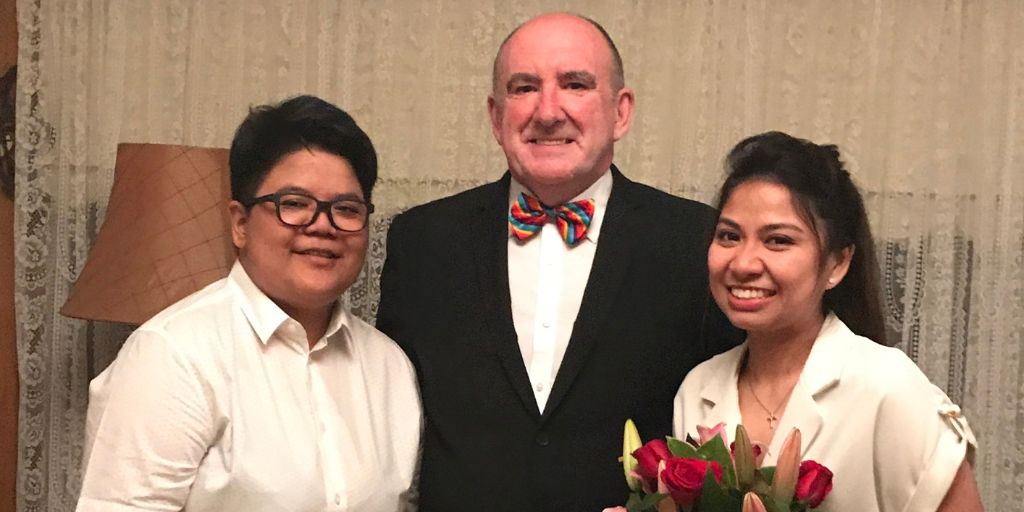
Should You Choose a Male or Female Celebrant?
While choosing a marriage celebrant in Melbourne, find out who among a male or femal wedding celebrant can best accommodate for any significant life event. A lot of decision making goes into planning any ceremony, so you should know if the gender of the celebrant can make any difference at all.
Six Months Prior To Your Wedding Day
Six months to wedding day so it is important that you start working with your photographer, the decorator to ensure that everthing is on track.
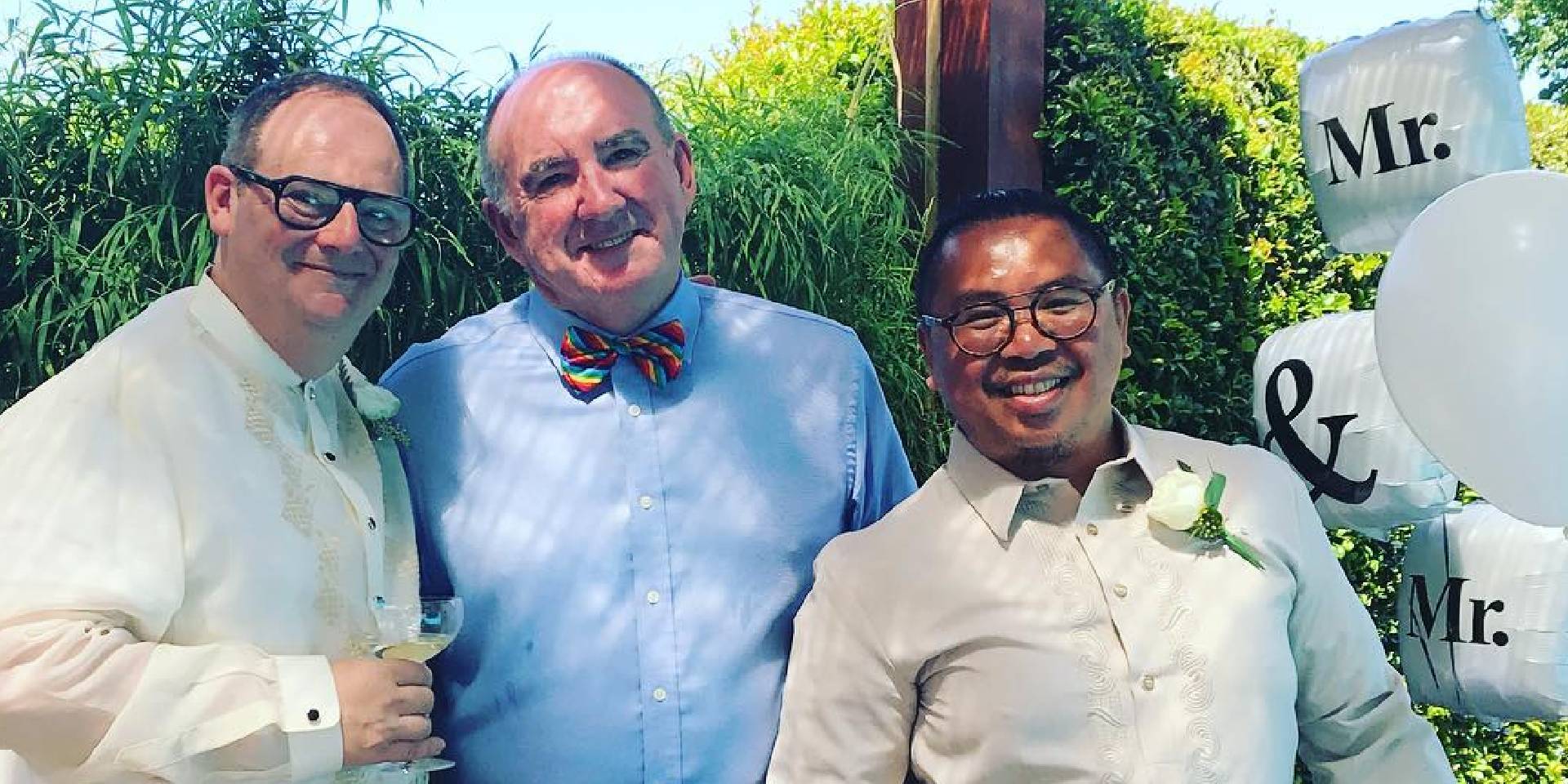
Special Wedding Dates for LGBTI Couples in 2019
Lots of LGBTI couples want special dates for their special day that they’ve waited far too long for their wedding. If you’re a couple trying to zero down a date, there are endless ways to decide on one.
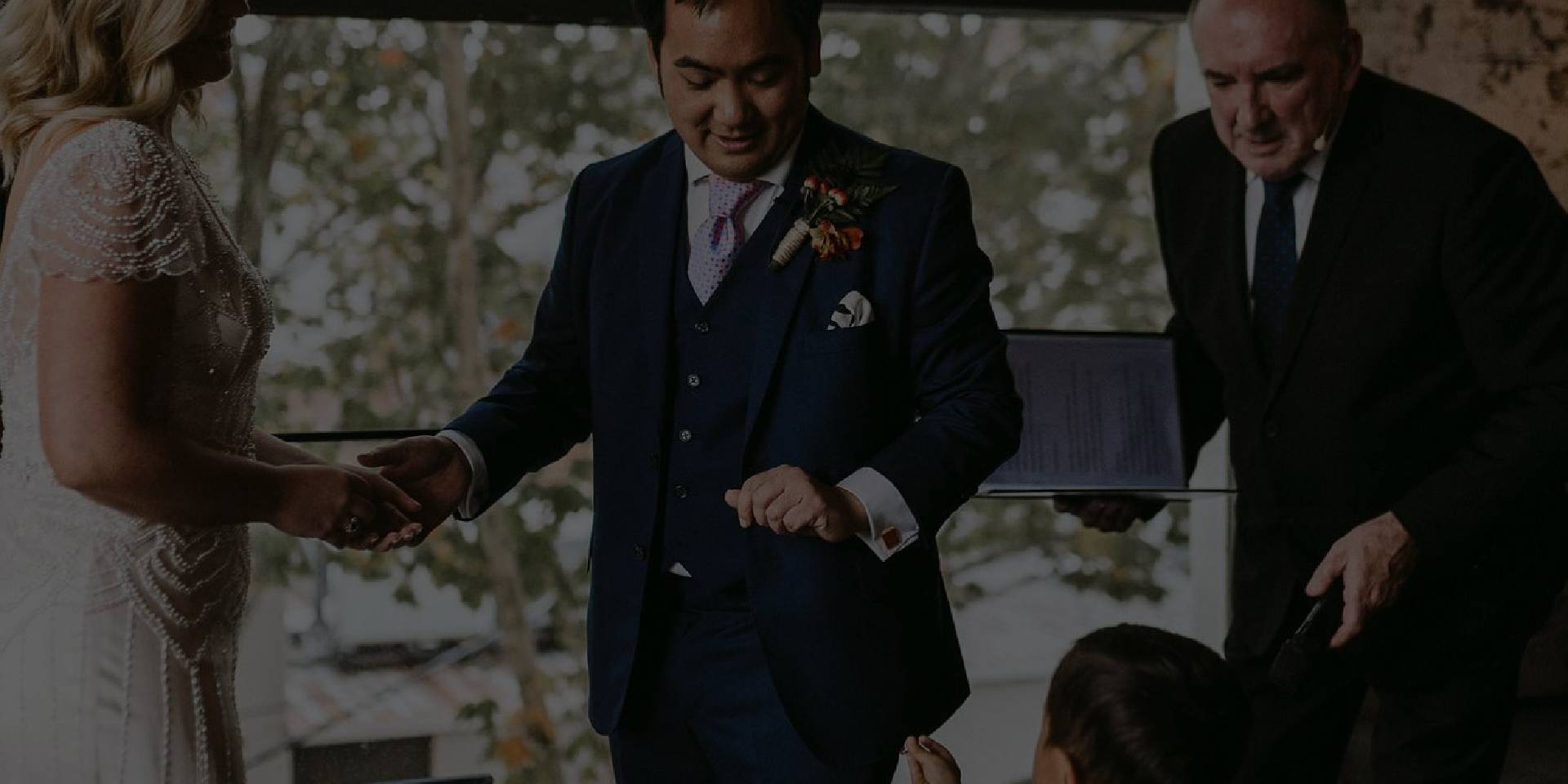
Surrogacy: when, not if, you will be parents
The journey to become a parent is not always easy for any couple. Increasingly, it is a journey that more and more people – both couples and single people – are choosing to embark on. Read on to know about the surrogacy journey of a gay couple in Australia.
Ten Months Prior To Your Wedding Day
Ten months to wedding day its important that you start working on your wedding preparations like catering, booking venue. guest list, selecting your dates.
The Comprehensive Guide to a Queer Wedding
A queer wedding is about love without compromise. Find inspiration, ideas, & styling tips to create a celebration that’s truly yours.
The Day Before Your Wedding
The Day to wedding day so it is important that you start working with your photographer, the decorator to ensure that everthing is on track.
The Day Of Your Wedding
The Day to wedding day so it is important that you start working with your photographer, the decorator to ensure that everthing is on track.
The Role of the Civil Marriage Celebrant
Find out about the role of a Marriage celebrant in Australia. Celebrants are highly trained and qualified. Marriage Celebrants appointed since 2003 have had to undergo special training before being appointed. Read more on what to expect from a marriage celebrant.
The Ultimate Guide To Wedding Rings For LGBTIQ+ Couples
Are you engaged and are looking for a LGBTIQ+ friendly Wedding Ring that’s outside the box? Find out about Wedding Ring types, popular LGBT trends, where to shop online and more in this detailed guide.
Three Months Prior To Your Wedding Day
Three months to wedding day so it is important that you start working with your photographer, the decorator to ensure that everthing is on track.
Three weeks Prior To Your Wedding Day
Three weeks to wedding day so it is important that you start working with your photographer, the decorator to ensure that everthing is on track.
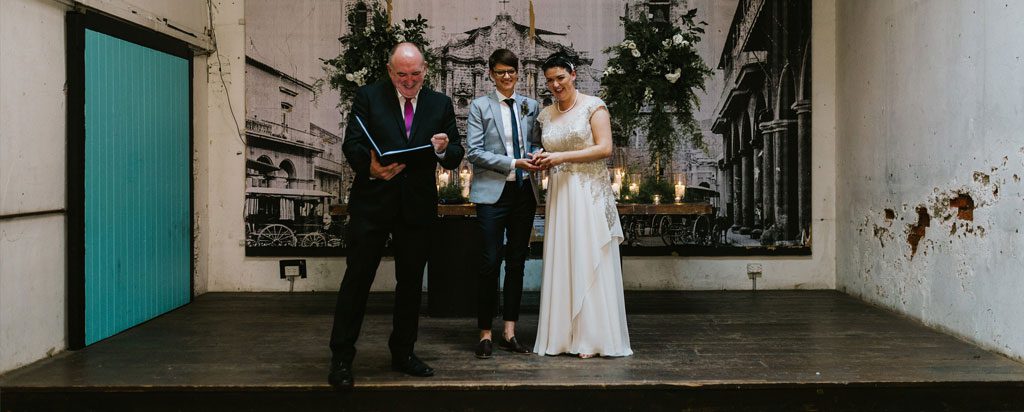
Tips for marriage celebrants to keep in mind when working with wedding photographers
Nobody is going to be looking at the happy couple, instead just wondering who the heck that face belongs to, in the background when the couple are kissing.
Top 13 Gift Ideas For a Same-Sex Wedding
Find out 13 gift ideas in this blog for a same sex wedding. Gifts range from pet care, wedding photography, a painting perhaps or just cook for the couple.
Top Wedding Dress Shopping Tips For Lesbian Brides
Choosing outfits for lesbian brides is a challenging task. Find some tips here, from experts in wedding fashion, to help you with your wedding dress.
Twelve Months Prior To Your Wedding Day
Just before a year to your wedding day its important that you need to start focusing on the big things like style, size, budget, date and guest list.
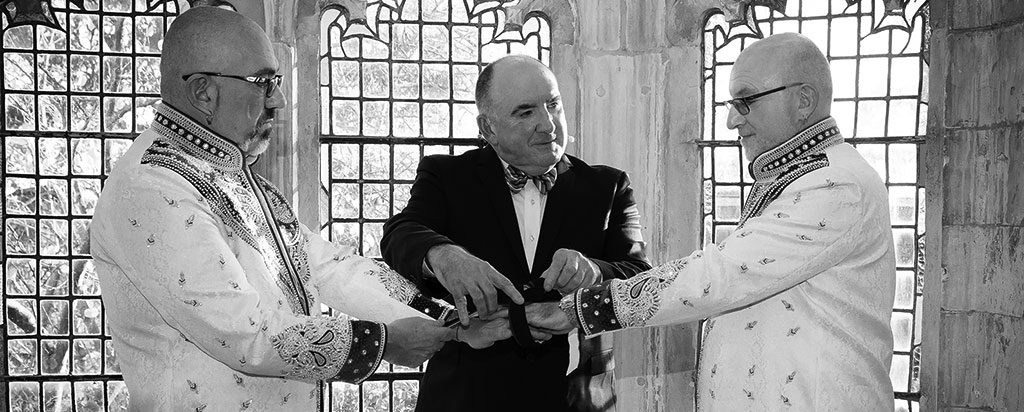
Twenty trends in LGBTIQA+ weddings in Melbourne
Almost every couple I marry is seeking a meaningful ceremony that allows them to tell their story. They want a wedding ceremony that they can identify with and celebrates their love, in a way like no one else they know has done.
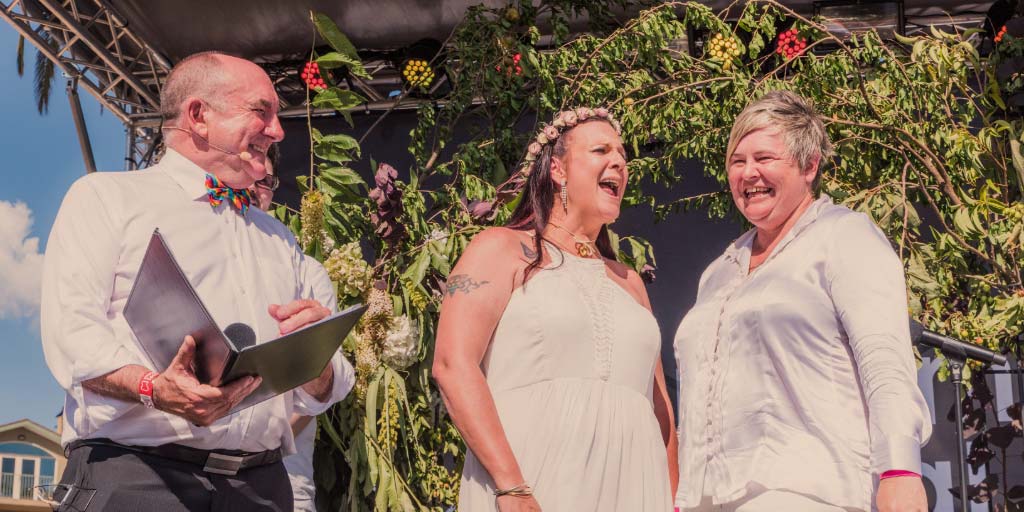
Two Months Prior To Your Wedding Day
Two months to wedding day so it is important that you start working with your photographer, the decorator to ensure that everthing is on track.
Two weeks Prior To Your Wedding Day
Two weeks to wedding day so it is important that you start working with your photographer, the decorator to ensure that everthing is on track.
Ways to Plan Your Gay Wedding Ceremony in Melbourne
Plan Your Gay Wedding Ceremony in Melbourne so that everything falls in line on your special day. Just as with wedding ceremonies, there are countless ways to make your ceremony meaningful, personal, and reflective of who you are, individually and as a couple.
Welcome Your New Baby With a Naming Day Ceremony in Melbourne
Naming Day Ceremony in Melbourne are done by celebrants like Bronte Price. The important thing is to celebrate your unique family, commemorate the special commitment you are making to your child.
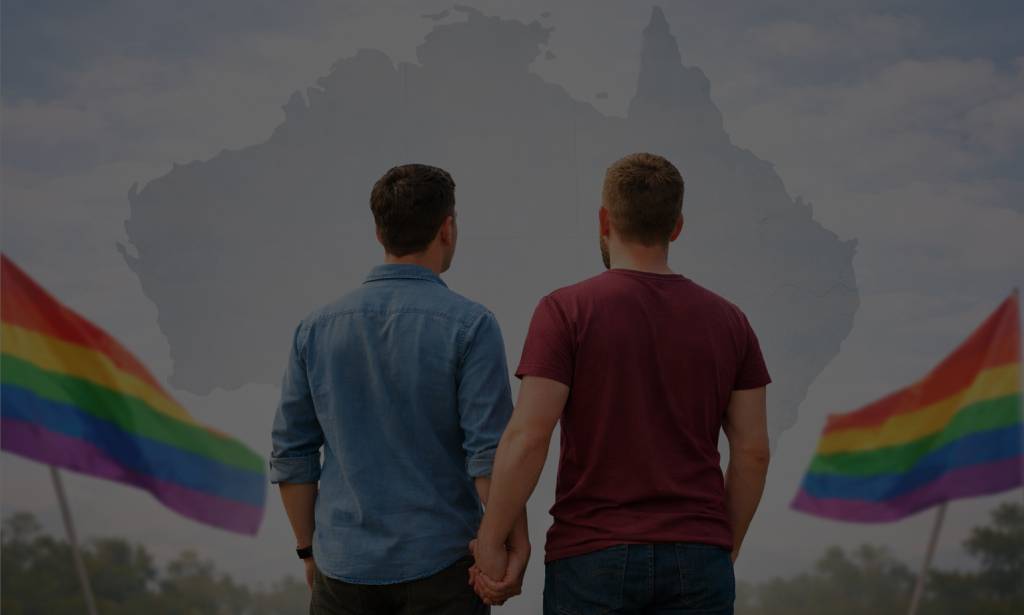
What’s the Legal Status of Gay Marriage in Australia?
A friendly guide for Australian and international couples — with just the right amount of sparkle.
Why Couples Renew Their Wedding Vows: Bronte Price Speaks with Tom Elliott on 3AW
Discover the growing trend of renewing wedding vows. From milestone anniversaries to heartfelt personal promises, learn why couples celebrate their love again with unique, meaningful ceremony.

Why Do Closeted Couples Get Married?
My experience with lots of closeted couples has taught me that they fear that sort of reaction – and it can even drive them further back into the closet and make them close that closet door for even longer.
Why Do Some Choose a Commitment Ceremony Over a Wedding?
Find out the key differences in Commitment Ceremony Vs Wedding Ceremony. There are numerous reasons why both heterosexual and homosexual people choose not to get married. Reasons why some choose the former over the later and more from the Gay celebrant in Melbourne.
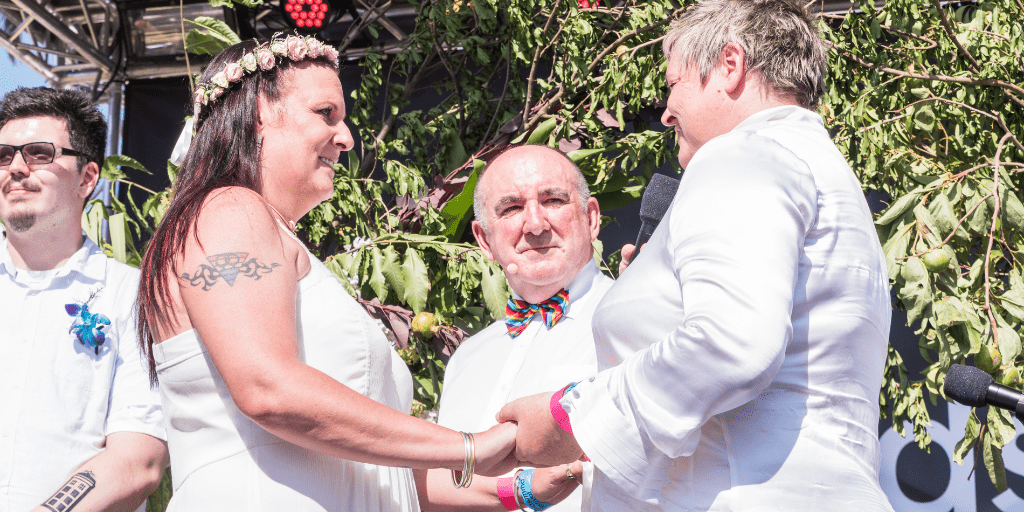
Your Guide to Lesbian and Same-Sex Weddings in Melbourne and Victoria
Planning a unique, romantic, and budget-friendly lesbian wedding in Melbourne? Get expert tips, venue ideas, and advice from an experienced gay marriage celebrant with over 200+ LGBTIQA+ weddings under his belt. Discover how to create a meaningful ceremony tailored to your needs.
Error: No feed found.
Please go to the Instagram Feed settings page to create a feed.